Electric motors, together with generators, are now one of the most important technologies for the energy transition and sustainable mobility. From automotive applications to industrial systems to generation from renewable sources, they are the link between electrical energy and mechanical movement.
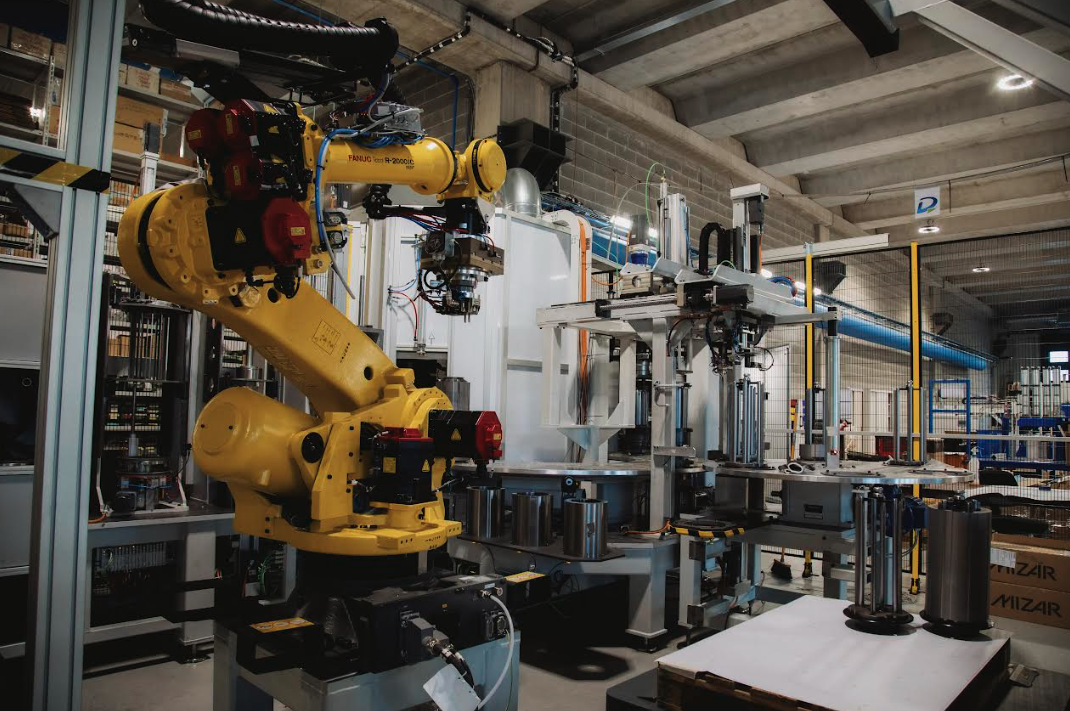
Behind every motor lies a complex production chain, in which precision, repeatability and control are essential. For this reason, the production of stators and rotors requires a high level of automation, capable of continuously managing extremely delicate processes.
In this context, Dema SpA uses a tailor-made approach, offering automation solutions designed for each individual project. In fact, each engine has different characteristics, objectives and constraints: for this reason, the proposed solution is always optimized according to the specific needs of the customer, with the aim of guaranteeing efficiency, quality and reliability.
Dema’s core competencies concern the key processes for the production of the electric motor:
• stacking, the stacking of laminations for the formation of stator and rotor packs;
• joining, the joining of laminations through welding or gluing techniques;
• Inspecting, automated quality control with mechanical measurements or through machine vision and sensors;
• assembling, the assembly operations that precede the winding phase.
Thanks to this combination of skills and a personalized approach, the production of the stator and rotor pack can be optimized in every detail, reducing time and variability and ensuring constant performance over time.
Table of Contents
- What is an electric motor and why is it crucial
- Main components of the electric motor
- Production processes of electric motors
- Technologies and innovations in production
- Sectors of application of electric motors
- Benefits of automation in production processes
- FAQs about electric motors
- The future of electric motor manufacturing
What is an electric motor and why is it crucial
An electric motor is a machine that converts electrical energy into mechanical energy by the interaction of magnetic fields generated by windings or permanent magnets.
Its operation is based on Lorentz’s law, according to which a conductor crossed by current in a magnetic field undergoes a force that causes it to move.
This technology underpins a growing share of the world’s energy consumption: motors and motor-driven systems absorb around 53% of global electricity.
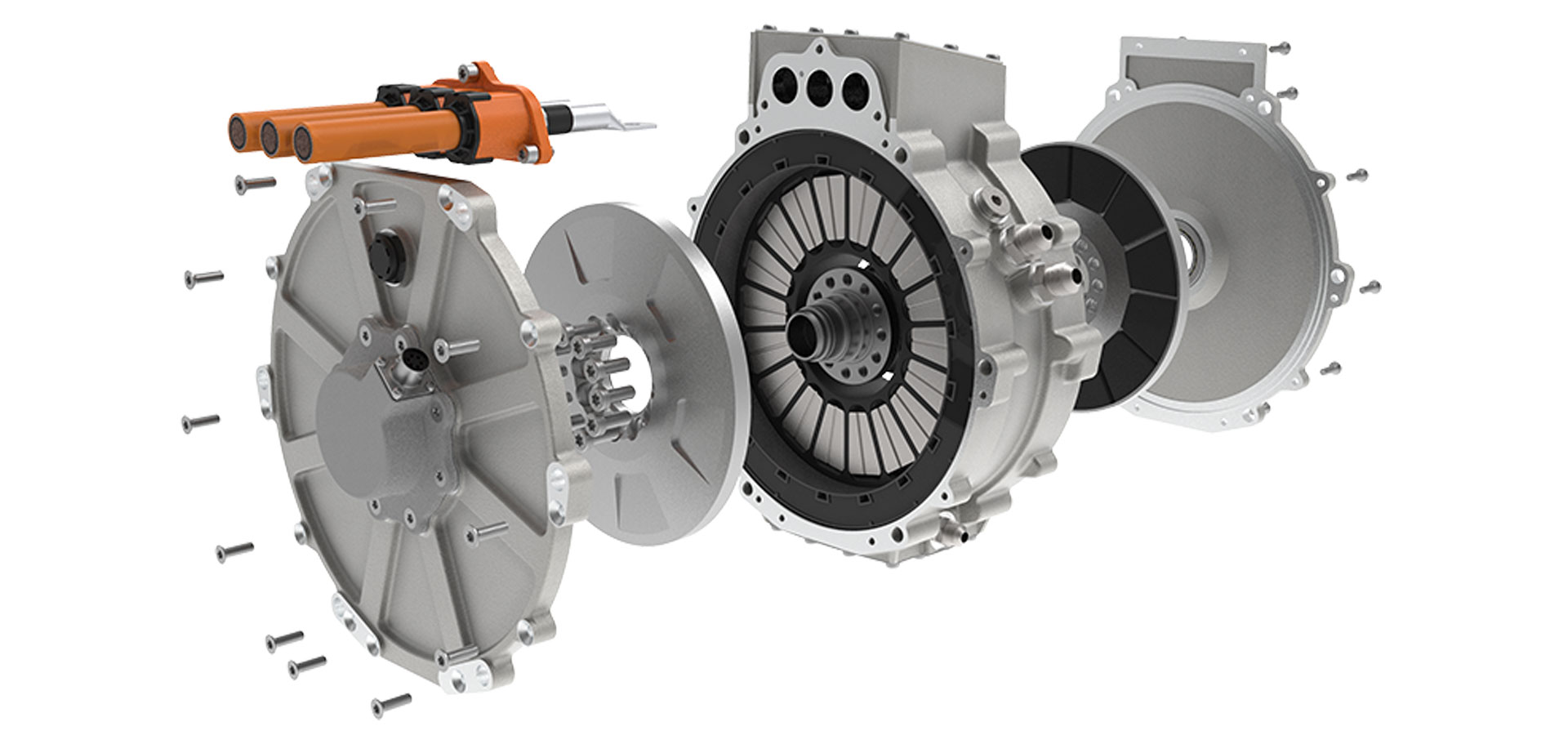
The main components: stator, rotor and windings
An electric motor consists of two basic elements:
• Stator – the fixed part that generates the magnetic field. It is made up of magnetic laminations isolated from each other and superimposed, in order to limit losses due to eddy currents and thus increase efficiency.
• Rotor – the moving part that rotates inside the stator, connected to the crankshaft. The rotor is also made of packs of laminations, in which conductors or permanent magnets can be housed.
• Windings – copper or aluminum conductors that, when carried by current, generate the magnetic field.
• Insulation, canopies and supports – ensure protection, rigidity and thermal dissipation.
The ratio between stator and rotor, the quality of the materials and the precision of the assembly determine the efficiency and silence of the motor.
Production processes: from stacking to assembly
The construction of an electric motor starts from magnetic laminations, obtained by shearing from steel strips. The subsequent phases define its electromagnetic and mechanical characteristics.
1) Stacking
In this phase, the laminations are stacked in a controlled sequence, often alternating the orientation of the lamellas to ensure the compensation of defects and improve the compactness of the pack.
Correct opposition is essential to achieve magnetic uniformity and minimize vibrations during engine operation.
Automatic systems manage selection, positioning and compression, ensuring precision and repeatability in each cycle.
Note on stacking factor: it is the ratio of actual ferromagnetic material to total thickness of the package; A higher value indicates better magnetic performance.
2) Joining
The laminations can be joined with different techniques:
• welding (laser, plasma, TIG or MIG), which guarantees a rigid coupling;
• structural bonding, which reduces deformation and improves stability;
• Patented hybrid technologies, such as DDLock, that combine the two principles to balance rigidity and precision. DDLock has been developed to ensure maximum tightness of the laminations placed at the ends of the pack, the most complex to keep firmly attached to the structure.
• Repressing/compaction – improves stacking factor and overall electromagnetic yield.
3) Inspection and quality control
Mechanical checks to verify geometry and flatness, multiple vision systems and laser sensors to identify defects in-line, with traceability of process data. (For an example of a native digital inspection platform, see Smart Digital Inspection System with Siemens Industrial Edge.)
4) Final assembly
Magnet insertion, tree planting, glue application, cleaning and packaging management.
Technologies and innovations in the production of electric motors
• Modular automation – lines consisting of autonomous but connected stations, reconfigurable for new models.
• Digital controls and artificial vision – real-time dimensional/qualitative checks.
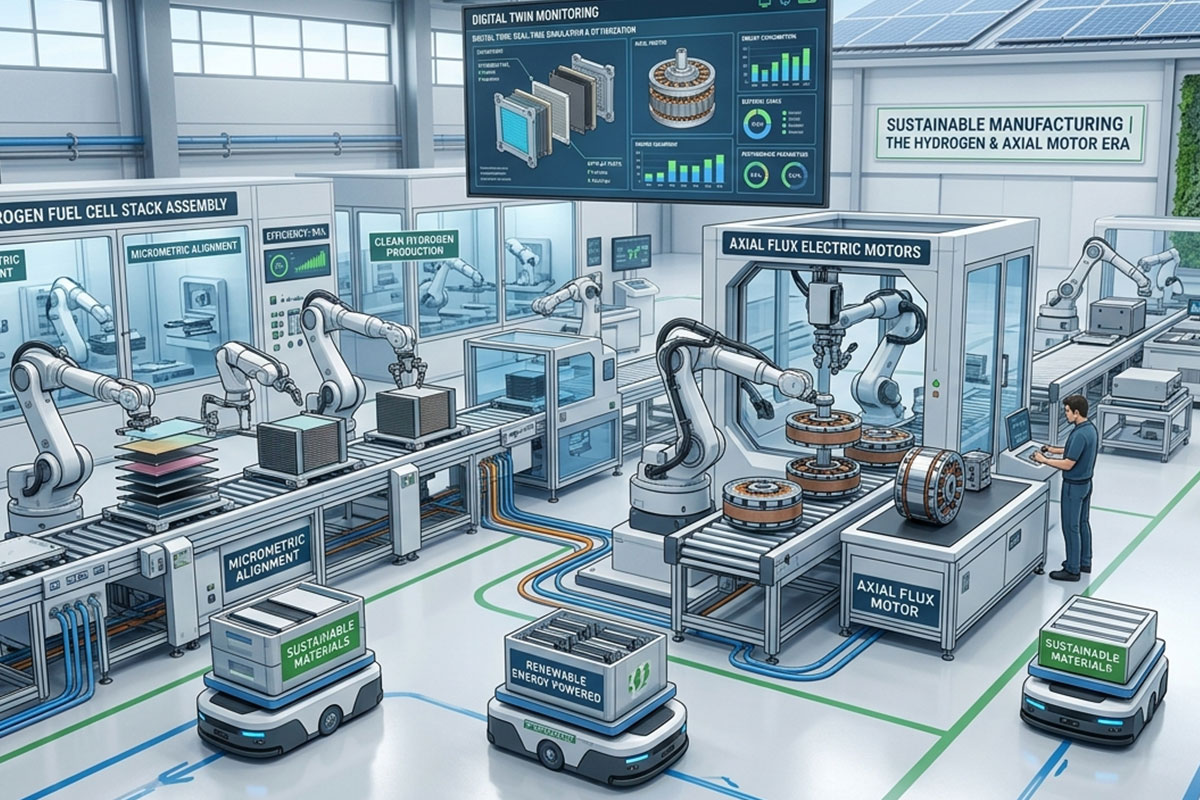
• Digital Twin – virtual replication of the process that allows deviations to be predicted and commissioning to be optimized (application examples in the SDIS mentioned above).
Patented in Dema (reference sections on the website):
• DDLock – hybrid bonding, partial bonding/partial use of backlack sheet metal + welding for stator/rotor packs.
• SALAG – automatic sorting system for very thin laminations for delicate handling.
• Segment Assembling – formation of the pack from segments/sectors to optimize time and tolerances.
Areas of application and engine requirements for each area
1) Powertrain / electric mobility
Requirements: high power density, high and stable torque, wide range efficiency , advanced thermal management , low NVH , cyclic reliability, integration with 800 V inverters in the latest architectures. (For a benchmark benchmark: BMW Gen-6 eDrive announces +20% overall vehicle efficiency vs. previous generation, 800V architecture, +30% range and 30% faster charging.)
2) Home appliances/utensils/consumer
Unit cost and process consistency , low noise, durability in dusty/humid environments, compact package. (Automation geared towards large volumes and reduction of defects per batch.)
3) Industrial applications / special motors
Dynamic controllability, efficiency on variable loads, mechanical robustness, dimensional accuracy and integration with supervision/diagnostic systems.
4) Renewable energy/generation (e.g. wind)
High continuous efficiency, thermal stability in varying environments, resistance to cyclic stress and minimization of magnetic/copper losses.
Benefits of automation in production processes
• Consistent accuracy through controlled, repeatable motions.
• Reduction of waste through continuous monitoring.
• Greater safety and traceability of the production cycle.
• Energy efficiency of the assembly process.
• Scalability and flexibility, with rapid adaptation to new models.
(For a concrete example of digitizing inspection and improving performance via edge-AI platform, see SDIS with Siemens.)
FAQ
What is the “stacking factor”?
It is the ratio of actual ferromagnetic material to total section/thickness of the pack; higher values correlate with better magnetic performance.
What is DDLock in short?
Patented hybrid technology (partial bonding or partial use of Backlack sheet metal + welding) for joining the laminations, with particular tightness on the ends of the pack.
Conclusion: The future of the electric motor lies in the precision of processes
Electric motor technology is experiencing a phase of technical maturity and profound industrial transformation. It is no longer just a matter of improving performance or reducing consumption, but of rethinking every production phase — from sheet metal to the assembly line — with an engineering approach based on automation, control and digitization.
The latest generation engines, such as the BMW Gen-6 eDrive, represent this evolution well: 800 V architecture, +20% overall vehicle efficiency, +30% range and +30% charging compared to the previous generation.
Behind results of this level there is an extremely precise work in the production of stator and rotor packs, where every micron counts and the stability of the processes becomes the real competitive advantage. In a landscape where energy efficiency, sustainability and performance converge, the ability to automate intelligently and bespoke is the game-changer. Every improvement in stacking, joining, inspecting and assembling processes is not only a step forward in manufacturing, but a fundamental building block in building the next generation of electric motors — lighter, more compact and more performant.
The future of the electric motor will not only be played out in the field of design innovation, but above all in the quality of the processes that make it possible.
Main sources cited
- IEA / EMSA – “Electric motors and motor systems… responsible for 53% of the world’s total electricity consumption.” 4E Energy Efficient End-use Equipment
- BMW Group (official release, EN) – Gen-6 eDrive details: 800 V, +20% overall efficiency, +30% range and charging speed. BMW Group PressClub
- Dema Automation – E-Motors & Site – DDLock, SALAG, Segment Assembling; Notes on stacking factor and process steps. Dema Automation+1
- Siemens + DEMA (PDF) – Smart Digital Inspection System (Industrial Edge). assets.new.siemens.com
- Emetor (technical glossary) – definition of stacking factor. emetor.com